Posted by Amy Sarcevic on 06 October 2026
How to recognise grooming - insights from survivor advocate Louise Edmonds

CONTENT WARNING - This article discusses childhood sexual abuse.
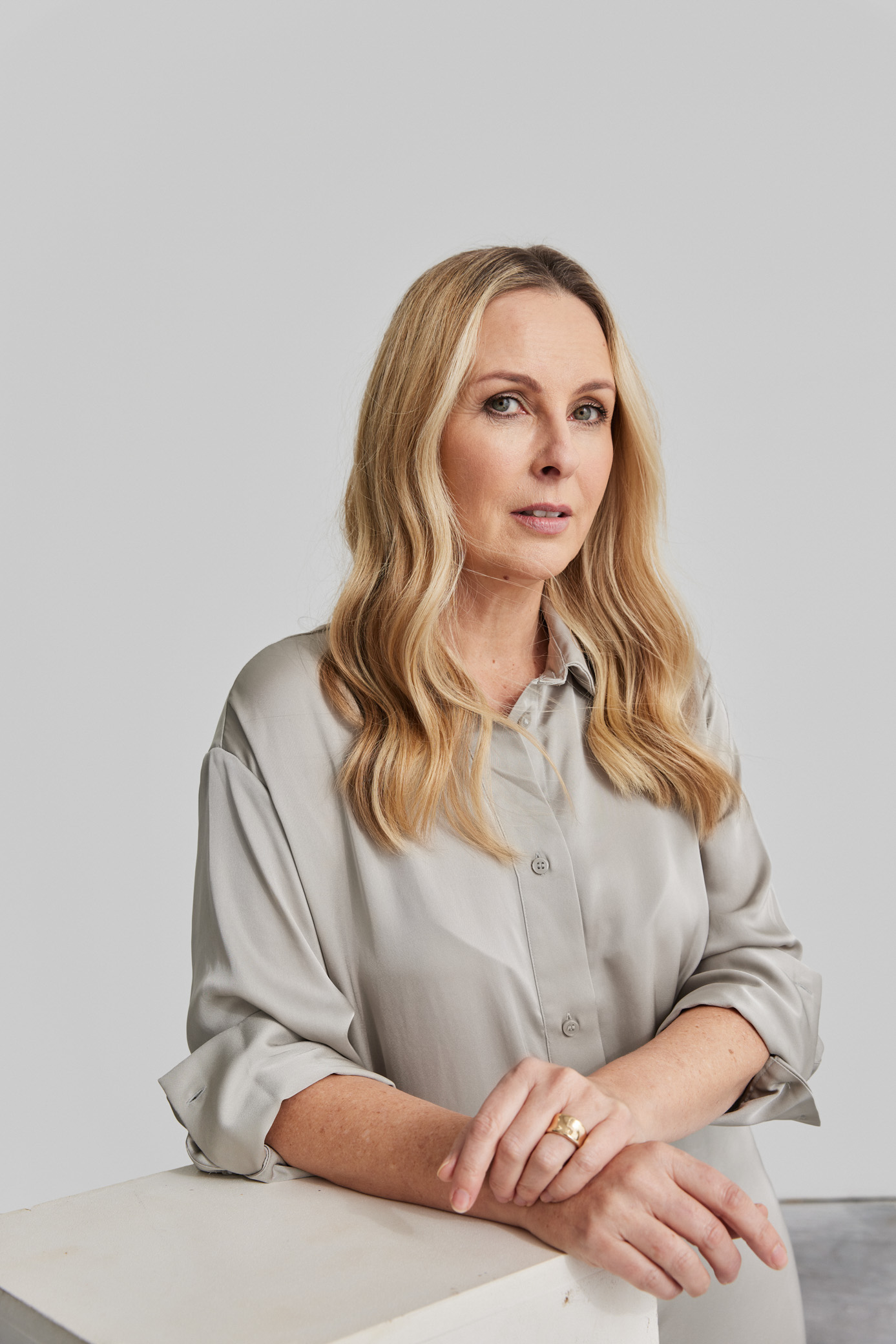 Parents of children in early childhood education are being trained on how to recognise the warning signs of grooming, as experts claim current safeguarding policies are leaving “blind spots” that keep children at risk of abuse.
Survivor Advocate and Founder of Grooming Recognition Louise Edmonds is behind the training, which has become popular in the aftermath of high-profile abuse allegations – in particular, those involving Victorian childcare worker, Joshua Dale Brown.
Last year, these allegations prompted a major political safeguarding movement, after more than 2,000 children under the alleged paedophile’s supervision were encouraged to undergo testing for sexual transmitted disease.
While measures like mandatory child-safety training and personal device restrictions have since been introduced across Australian childcare centres, many believe further measures are needed.
“In Australia, based on figures that one in three girls and one in six boys experience abuse, we know that approximately 1.3 million children are sexually abused every day, and the true figure is likely to be much higher. We also know that predators seek child-facing employment, such as teaching, babysitting and sports coaching, to gain access to children,” Louise said.
“Grooming recognition is an important preventative measure, but because it is such an uncomfortable subject, it is rarely discussed. As a result, we are finding that not enough parents know how to identify and address grooming.”
Multi lens perspective
To galvanise her training, Louise sought expertise from several advocates. Her team includes an abuse law specialist, a disclosure specialist and an award-winning cyber security survivor advocate, among others.
To bolster understanding of how predators act and behave, Louise has also recruited a former dance industry professional, and an ex-prison officer who spent four years transporting child sex offenders from prison cells to court rooms for sentencing.
“We wanted to give parents as much information - and as many resources - as possible to help them notice and report situations of concern. And importantly, not to doubt their intuition when something doesn’t feel right.
“We explicitly teach parents what a predator looks like, because it’s often not what they think. For example, we know predators as young as 15 and 16 are abusing children and propagating child sex abuse material (CSAM) online – for leisure and profit.”
Grooming tactics
Louise and team have identified a range of tactics that paedophiles use to target children. At the top of the list is an attempt to create “special access” - i.e. isolating the child in a room, away from other adult supervision.
“I always say to parents of young children: never let someone take your child into a room without your supervision – even a doctor when your child is getting their immunisations," Louise said.
Bids to gain special access are often coupled with attempts to build emotional dependence and Louise warns this can be done subtly.
“They often say things like, ‘no one understands you like I do’, or ‘don't worry about Mum or Dad, I’ve got you.’ They will then start to slowly blur emotional and physical boundaries. From a physical perspective, this could be touching the child on the wrist or back of the neck, which in adult terms are the erogenous zones."
Secrecy is a further grooming tactic, with predators sometimes threatening children in the event they tell another adult about their actions.
“A common tactic is for predators to threaten to harm or kill the child’s pet,” Louise warned.
Risk profile
As for which children are most at risk, Louise says there are misconceptions.
“We often assume it will be the quiet child, but research tells us it can be the child who most explicitly craves attention. This craving for attention will be exploited by the predator, who offers it in abundance,” she said.
Misconceptions around victim profiles are also rife, Edmonds said, with male victimhood an overlooked phenomenon.
“Child sex abuse affects one in three girls and one in six boys and yet it wasn’t until the 1980s that boys were included in the statistics, and the term ‘paedophilia’ was officially standardised in psychology,” she said. “While we have moved on considerably since then, many still do not understand the risk for boys.”
Increasingly, younger victims are also being targeted, Louise warned. Given the speed of grooming younger, non-verbal victims, Louise said parents should not wait to have any concerns formally addressed.
“A lot of predators today are going for younger victims because they cannot articulate what is going on and because of that, they can gain access to a child very quickly – potentially a week if they are seeing the child every day.”
Behavioural red flags
Regardless of whether the victim is verbal, Louise said many exhibit the same behavioural red flags. Of primary concern is a child who demonstrates a visible aversion to another adult, including a ‘trusted’ family member.
“Children's behaviour will change around the adult that is abusing them. For example, if you go to a family barbecue every week and there's a predator in that group, you might find the child doesn't want to be anywhere near them and especially not handed to them. They might start throwing a tantrum and clinging to their parent if an attempt is made to do that. Perhaps they might start crying when it is their turn to hug or kiss the adult goodbye.
“That’s a massive red flag. That is the child screaming for help, letting you know in the only way they can, that the adult in question is unsafe. You cannot and should not allow your child to go off with that person, even if it is someone you know and trust.”
A hard but necessary conversation
As a survivor herself, Louise admits the topic of grooming can be heavy and claims she is only able to speak about it confidently after years of trauma training and healing.
“It is harrowing and incredibly triggering for anyone with lived experience. Nonetheless, it is essential to have these uncomfortable conversations and do all we can to save children from a lifetime of trauma.”
Sharing more on this important topic, Louise Edmonds will present at the Children & Young People at Risk Conference.
This year’s event will be held 9-10 November at the Novotel Melbourne on Collins.
Learn more and register your tickets here.
If this content raises concerns for you, support is available:
• Bravehearts Information & Support Line — 1800 272 831
A specialist service for people affected by child sexual abuse, including children, young people, parents, carers, families and adult survivors. The service can provide information, support and referrals, including advice about what to do if a child discloses abuse. Available Monday to Friday, 8.30am–4.30pm AEST.
• Blue Knot Foundation — 1300 657 380
Provides trauma-informed counselling, information, referrals and support to adult survivors of childhood trauma, including childhood sexual abuse. It also provides support relating to the National Redress Scheme. Available 9am–5pm, seven days a week.
• 1800RESPECT — 1800 737 732
A free, national, 24/7 service for people experiencing or affected by sexual, domestic or family violence. It can provide counselling, information and referrals to specialist local services, including services dealing with childhood sexual abuse. Online chat and text support are also available.
• Grooming Recognition - www.groomingrecognition.com
Trains Adults to recognise the red flags of grooming behaviour early enough that a child never has to become the evidence that finally makes the system act.
• Kids Helpline — 1800 55 1800
Free, confidential, 24/7 counselling and support for children and young people aged 5–25.
• Survivors & Mates Support Network (SAMSN) — 1800 472 676
Provides support, counselling, groups and workshops for male survivors of childhood sexual abuse, as well as their families and supporters.
• knowmore
Provides free legal advice and support to people who have experienced child sexual abuse, including assistance with the National Redress Scheme.
• National Redress Scheme — 1800 737 377
Provides information and support for people who experienced institutional child sexual abuse.
• 13YARN — 13 92 76
A 24/7 crisis support service for Aboriginal and Torres Strait Islander people, providing a culturally safe space to talk with an Aboriginal or Torres Strait Islander Crisis Supporter.
• Lifeline — 13 11 14
Provides 24/7 crisis support for anyone experiencing emotional distress or feeling overwhelmed.
• 1800RESPECT Service Directory
A national directory where people can search for local sexual-violence, counselling, health, legal, advocacy and other support services by location and type of assistance required.