

Greenbuild 2026 Summit
Building Intelligence in the Age of AI
A technical deep-dive, sponsored by Autodesk, will focus on real-world AI use cases across design, construction, and operations, as well as the enabling conditions that determine success.
Tuesday, October 20, 2026, at the Javits Center
AI in the built environment
Turn AI promise into measurable green building results. This full-day summit sponsored by Autodesk, highlights real-world AI use cases across design, construction, and operations, as well as the enabling conditions that determine success—data quality, interoperability, workflow changes, and lifecycle continuity.
Learn how to assess investment tradeoffs, verify outcomes, and scale adoption responsibly to support sustained high-performance building delivery and operations.
Summit sessions
Building Intelligence in the Age of AI: From Promise to Responsible Practice
Artificial intelligence is moving quickly from experimentation to real-world deployment across the building lifecycle. For the green building community, the central question is no longer whether AI will affect design, construction, operations, and portfolio decision-making. It is how to determine which AI applications are worth investing in, what impacts they can credibly deliver, and what conditions must be in place before they can be trusted and scaled.
This opening session frames the Greenbuild AI Summit, Building Intelligence in the Age of AI, through an impact-first lens. Rather than treating AI as a technology trend, the session asks how AI can support measurable sustainability outcomes: decarbonization, performance, resilience, health, equity, operational efficiency, and long-term asset value. It also acknowledges the tradeoffs and risks that come with AI adoption, including data quality, workflow disruption, governance gaps, human accountability, adoption barriers, and the environmental footprint of digital systems themselves.
Speakers will introduce a practical evaluation lens for the day: impact, readiness, and adoption. Attendees will be invited to ask: What outcome does this AI application improve? What evidence supports that claim? What data, infrastructure, governance, and workforce capacity are required? Can the solution be adopted, maintained, and scaled responsibly across real building and market contexts?
The session will also preview the Summit’s learning arc: investing beyond tools, enabling trusted building intelligence, making intelligence visible, validating AI-enabled project evidence, scaling with guardrails, and translating the day into market action. A brief industry perspective from Autodesk will connect the opening frame to the role of connected data, carbon insight, and lifecycle decision-making in AI-enabled practice.
Attendees will leave with a shared vocabulary and a set of practical questions to carry through the day as they evaluate how AI can move from promise to responsible practice in the built environment.
The Next Sustainable Resources: Trusted Operational Intelligence
What will it take for AI to make better building decisions instead of simply recreating knowledge we already have?
This opening keynote frames AI as a shared capability for the entire building community, not simply another application or a tool for technology specialists. A brief audience interaction introduces the idea that useful building intelligence depends on the combined knowledge of many people, disciplines, and systems. This sets the stage for the Summit’s broader examination of how that intelligence can be connected, trusted, and sustained over time.
Steve Jones will establish why this question matters now. Drawing on decades of industry research, including the widely referenced SmartMarket Reports, he will examine the gap between the building industry’s accelerating AI ambitions and its readiness to support them. Fragmented workflows, inconsistent project handovers, disconnected applications, and the continued loss of building intelligence prevent information from moving reliably from planning and design through construction, operations, and ownership.
Drummond Reed will then explore the trust foundation required to move from connected buildings to trusted operational intelligence. Drawing on his work in decentralized trust at the Linux Foundation, he will show how smart buildings function as verifiable trust communities, where people, organizations, devices, and AI agents must continuously establish trusted relationships before information and decisions can be relied upon.
As moderator, Kimon Onuma will connect these perspectives to the broader AI Summit theme. He will frame building intelligence as a sustainable resource that begins with design intent and grows throughout the building lifecycle. By connecting industry trends with trusted operational communities, he will introduce the central challenge for the day: how to preserve, connect, and continuously improve building intelligence rather than repeatedly recreating it.
Together, the speakers introduce Trusted Operational Intelligence: building knowledge with sufficient identity, context, provenance, responsibility, continuity, and trust to support decisions made by both people and AI.
Yet intelligence itself has rarely been treated as a resource worth preserving. Every building begins accumulating intelligence the moment it is conceived, yet few organizations preserve it as deliberately as they preserve energy, water, materials, or carbon. Architects contribute purpose, intent, assumptions, and design decisions. Engineers, builders, owners, operators, occupants, and technology providers add new layers of knowledge throughout the building's life. Over time, our industry has largely evolved contracts and deliverables around document artifacts, drawings, specifications, reports, and models, rather than preserving the intelligence behind them. The result is that organizations repeatedly rediscover knowledge they have already paid to create.
For more than three decades, the green building movement has challenged us to reduce the waste of energy, water, materials, and carbon.
The AI era presents another sustainability challenge: the waste of intelligence. Every time intelligence is lost, organizations spend additional time, money, and effort rediscovering what was already known. As AI becomes embedded in the built environment, it will depend on the intelligence we choose to preserve, not just the documents we leave behind.
Participants will leave with a clearer understanding of why AI-ready buildings require more than technology, and how trusted, preserved, and continually improved building intelligence can become the foundation for sustainable decisions throughout the building lifecycle.
If intelligence is one of a building's most valuable resources, why do we keep throwing it away?
Investing for Impact: Where AI Creates Value Across the Built Environment [Presented by Autodesk]
AI is rapidly moving from experimentation to implementation across the built environment. As organizations evaluate where to invest, the most important decisions often extend beyond AI tools themselves. Successful adoption depends on investments in connected data, interoperable workflows, workforce readiness, and the ability to turn insights into action. This session explores where AI is creating value across design and make workflows today. From accelerating design exploration to improving collaboration and supporting sustainable outcomes, AI is helping teams make better decisions throughout the project lifecycle.
Become the Building: Creating Trusted Operational Communities with People, Machines, and AI
This is not a session where attendees simply watch a finished solution being presented. Participants will step into the roles of owners, occupants, operators, designers, engineers, technology providers, public agencies, building systems, and AI agents, and work together to explore how trusted operational intelligence is created through collaboration.
Participants will also experience how building intelligence is created, shared, and too often lost. As roles interact, they will see how design intent, engineering decisions, construction knowledge, operational experience, and occupant insights accumulate throughout a building's life. Rather than treating this intelligence as a byproduct of project deliverables, the session explores how it can become a sustainable resource that continues growing instead of being repeatedly recreated.
"Become the Building" is the living collaborative experience of the AI Summit and the culmination of a collaborative journey that begins months before Greenbuild. Starting in August, a series of public webinars, workshops, and mission-based exercises invite participants from across the industry to explore operational challenges, contribute ideas, test approaches, and help build the evolving knowledge model. Rather than starting from scratch at the conference, Greenbuild participants step into a living operational community that has already begun learning together.
At Greenbuild, participants join that continuing journey by interacting with presenters, previous mission participants, and one another. Results and lessons from the pre-Greenbuild missions become part of the live experience, while new audience contributions immediately extend the shared building intelligence and help shape future missions.
Using the PAE Living Building as the common reference environment, participants interact with presenters, previous mission participants, and one another. Results and lessons from the pre-Greenbuild missions become part of the live experience, while new audience contributions immediately extend the shared building intelligence and help shape future missions.
Every participant contributes a different perspective, demonstrating that no single discipline, software platform, or AI system possesses all of a building's intelligence or can preserve it alone. It emerges through connected communities working together over time.
Unlike a traditional conference session, Become the Building is one chapter in a larger collaborative effort that begins before Greenbuild, expands through live participation during the Summit, and continues afterward as the community preserves and improves building intelligence together.
The experience is organized around the Five Principles of Trusted Operational Intelligence: Identity, Context, Trust, Continuity, and Improvement, which provide a common framework for connecting people, operational systems, digital twins, AI, and organizational decision-making without prescribing a single platform or technology. These principles provide practical guidance for preserving and continuously improving building intelligence as organizations, software, staff, vendors, and AI continue to evolve.
Presented by Zahra Ghorbani, Stephen Lothrop, Tristan de Frondeville, and Kimon Onuma. The session demonstrates that building intelligence is created by people long before AI arrives. Technology helps capture, preserve, connect, validate, and apply that intelligence, but it does not replace the experience, intent, and judgment that create it.
The missions continue throughout the Summit and beyond. Contributions from the pre-Greenbuild workshops, live sessions, and post-event activities become part of the evolving Living BIMStorm, demonstrating that building intelligence grows through continuous participation rather than a single event.
Participants won't just learn about building intelligence—they'll help create it, preserve it, and contribute it to a living body of knowledge that continues growing long after the Summit concludes.
Making Building Intelligence Visible: Spatial/AR Tools for Communicating Future Built Environment Decisions
AI, digital modeling, BIM, GIS, and infrastructure data are increasingly shaping the planning of buildings, districts, and climate resilience projects. Yet many of these decisions remain difficult for community members, owners, policymakers, and other stakeholders to understand because the information is often communicated through technical drawings, models, or reports that are disconnected from the physical places they affect.
This interactive lunch session will explore how location-based augmented reality can make future built environment decisions visible at full scale and in context. Through case studies from U.S. cities and regions, attendees will examine how spatial AR tools are being used to communicate proposed buildings, infrastructure investments, zoning scenarios, affordable housing, transit corridors, and climate resilience strategies before construction begins.
The session will connect immersive technology to practical green building and community-scale outcomes, including stakeholder engagement, public trust, project alignment, and more transparent decision-making. The indoor presentation will be followed by an optional live AR demonstration near the Javits Center/Hudson Yards area, allowing attendees to experience how georeferenced digital information can be layered onto real-world urban conditions.
Proof Over Promises: Validating AI-Enabled Performance
Artificial intelligence is moving quickly into construction workflows, promising optimized schedules, automated risk detection, improved coordination, and faster project decision-making. But in an industry where margins are tight, safety is critical, and sustainability outcomes depend on what is actually delivered in the field, AI-enabled insights need to be validated before teams can rely on them.
This session explores one of the most important questions in AI adoption: how do we know the data is right before it informs construction decisions?
Panelists will discuss how construction leaders, technology providers, investors, and practitioners are evaluating AI-enabled tools against real project data. Through practical examples, the session will examine how teams can verify AI-generated outputs; including schedules, estimates, risk signals, field observations, coordination issues, material data, and performance-related insights against ground-truth project conditions. The conversation will also address common AI pitfalls such as poor historical data, hallucinated outputs, algorithmic bias, fragmented construction records, and garbage-in/garbage-out decision-making. Attendees will learn how project teams can establish quality-control workflows, train teams to critically evaluate AI outputs, and determine when AI-enabled insights are reliable enough to support project decisions. The goal is to help teams move from experimentation to accountable implementation: using AI not simply to generate more information, but to support better, faster, and more trustworthy decisions that advance project delivery, sustainability outcomes, and long-term building performance.
From Guidance to Guardrails: Scaling Trustworthy AI in Green Building Practice
AI is moving quickly from experimentation into green building delivery and operations, but the question for AECO stakeholders is no longer simply, What can AI do? It is: what can AI responsibly help teams do now, what is still emerging, and what guardrails are needed before it can be trusted across projects, portfolios, and platforms?
This session explores how AI-enabled support can reduce friction across the green building lifecycle from design guidance and documentation readiness to performance interpretation, operational decision-making, and verification confidence. Drawing from USGBC's Innovation & Research, Technology, and partnership work, the discussion will examine how AI can help teams navigate complex requirements, connect fragmented information, and make sustainability guidance more actionable while preserving professional judgment, accountability, and sustainability intent.
Speakers will use practical implementation patterns from AI-enabled sustainable design guidance, internal knowledge support, performance data interpretation, and platform-connected workflows to discuss what is becoming possible and what must be designed carefully. Topics will include trusted knowledge sources, data quality, integration boundaries, human escalation, user adoption, and success measures. The conversation will also address sensitive but important questions for the industry: how AI can reduce administrative burden without replacing expertise, how project teams and consultants may use AI-enabled support responsibly, and how organizations can distinguish useful automation from overreach.
An external partner perspective will ground the discussion in real building performance workflows, such as using analytics to identify performance drift, prioritize actions, support operations, and track progress toward portfolio goals. The session will close with a practical Concept-to-Scale Blueprint that attendees can use to evaluate AI opportunities, define guardrails, and identify responsible adoption pathways across projects, portfolios, and organizations.
Owner Leadership in the AI Era: From Trusted Intelligence to Market Action
As the Summit’s closing forum, this session brings owners from transportation infrastructure, higher education, and healthcare together to define what the market must deliver next. Participants will hear how major owner organizations are preparing for AI, where their priorities differ, and which requirements for trusted operational intelligence remain remarkably consistent across sectors.
This closing forum brings together owner leaders to answer the central question raised throughout the AI Summit: How do we preserve building intelligence as a trusted, long-term organizational asset? Building on the keynote and the Become the Building collaborative experience, owners will discuss how procurement, governance, and operational leadership can transform building intelligence from fragmented project information into a sustainable resource that continues creating value throughout the building lifecycle.
Owners ultimately decide what information must be delivered, preserved, governed, and carried forward throughout the building lifecycle. As AI accelerates across the built environment, owner leadership will increasingly determine whether building intelligence remains fragmented across disconnected systems or becomes a trusted organizational asset that continues creating value for decades.
The forum challenges the industry to move beyond technology demonstrations and establish the conditions under which AI-enabled building intelligence can deliver meaningful sustainability, resilience, operational performance, and long-term owner value. Owners will articulate what they need from architects, engineers, contractors, technology providers, standards organizations, educators, and policymakers, turning those expectations into a call to action for the broader industry.
Artificial intelligence is accelerating across the built environment, but its greatest opportunity is not simply automating today's workflows. It is helping preserve, connect, govern, and continuously improve the building intelligence created throughout a facility's lifecycle.
For decades, owners have inherited fragmented information spread across BIM models, GIS, building automation systems, CMMS platforms, PDFs, spreadsheets, and proprietary applications.
AI did not create this fragmentation; it inherited it. As organizations begin deploying AI agents across these disconnected systems, owners face a more fundamental question than which AI platform they should use: What building intelligence must persist across every project, every application, every organization, every generation of staff, and every AI model?
Bringing together leaders from three very different owner organizations, the forum explores the common challenges emerging across their sectors. While each organization has unique operational priorities, they increasingly share the same strategic questions:
- How do we establish trusted operational intelligence?
- What information should owners require throughout the building lifecycle?
- How can AI be trusted to support decisions?
- What should architects, engineers, contractors, technology providers, and standards organizations deliver to make that possible?
Throughout the Summit, participants will explore these questions from three complementary perspectives. The keynote establishes why building intelligence is a sustainable resource. Become the Building demonstrates how it is created, connected, and preserved through trusted operational communities. This closing forum asks how owners can turn those ideas into procurement requirements, governance practices, and market expectations.
Rather than a series of presentations, the forum is organized around a common set of questions developed throughout the Summit. These questions draw directly from participant discussions, polls, and collaborative missions, allowing owners to respond to the ideas the audience has already explored.
This closing forum brings those perspectives together. Rather than asking how AI can make today’s fragmented processes faster, the discussion asks how the industry can build a shared operational understanding that survives every project handoff and enables trusted intelligence over the life of a building. Moving beyond technology demonstrations, the panel will identify the market conditions required for AI to create lasting value.
Each panelist answers the same three questions:
- What building intelligence should never be lost?
- What will your organization begin requiring?
- What should the industry deliver next?
Moderated by Mike Bordenaro of the Asset Leadership Network, the discussion features owner perspectives from Luciana Burdi of Massport, John Messner of Penn State University, and Seydina Fall of Johns Hopkins University. Representing transportation infrastructure, higher education, and healthcare, these leaders will illustrate how their organizations differ in mission, scale, and technology maturity, and where their underlying needs align.
The session concludes with a commitment round in which panelists identify one market priority, one industry expectation, and one near-term action that participants can take after Greenbuild to advance trusted operational intelligence.
What to expect
CE-accredited sessions
Greenbuild's Summit Working Group has programmed an in-depth session that will give attendees an inside look at how AI is used in the built environment. This all-day Summit will give attendees the chance to dive into real-world applications of AI and how they can benefit building projects.
Continuing education credits are available for Greenbuild's in-person summits.
Who will you hear from?
Our summit speakers bring their expertise, specialized knowledge and experience to the room for a focused learning experience like no other.
With CEOs, CIOs, Presidents, Vice Presidents, Partners and various other sustainability leaders taking to the stage, you couldn't be in better company.
Who will you meet?
Greenbuild features a cutting-edge community of global green building professionals looking to improve sustainability, resilience, equity, health and wellness in the spaces we live, work, play and learn. Take a look at who you'll meet at a Greenbuild summit.
Summit learning objectives
- Identify the AI solutions landscape for AECO—and where it actually moves sustainable performance. Clarify what’s working today across design, construction, and operations; separate high-value applications from hype; understand what’s mature vs. emerging.
- Evaluate where AI creates net-positive value—and what it takes to achieve it. Apply an “Invest for Impact” lens to weigh benefits against the real requirements: data readiness, integration, workflow redesign, role shifts, training/reskilling, and maintenance.
- Identify the practical barriers—and enabling conditions—that determine whether AI can scale lifecycle-wide. Understand common blockers (data gaps, fragmented tools, weak handover, unclear accountability, misaligned workflows) and the patterns that overcome them through integration and continuity.
- Build a practical approach to define success, validate outcomes, and scale responsibly. Learn how teams set success criteria, choose metrics, verify results, and manage implementation risk with human-in-the-loop safeguards, transparency, procurement alignment, and data/cyber practices.
Secure your spot
Greenbuild's Summits offer a technical, hands-on course where you can work directly with experts and peers on critical topics impacting our industry.
Summits included in Conference and Student Passes
Summit Working Group members
The Greenbuild Summit Working Group consists of green building experts that advises our conference and program team on all aspects of our 2026 Summits, ensuring Greenbuild is at the forefront of the industry.
- Kimon Onuma, Founder and President, ONUMA
- Mike Bordenaro, Executive Director, ALN (Assert Leadership Network)
- Eve Lin McNaughton, Director, Innovation & Research, USGBC


Sponsor a Greenbuild Summit
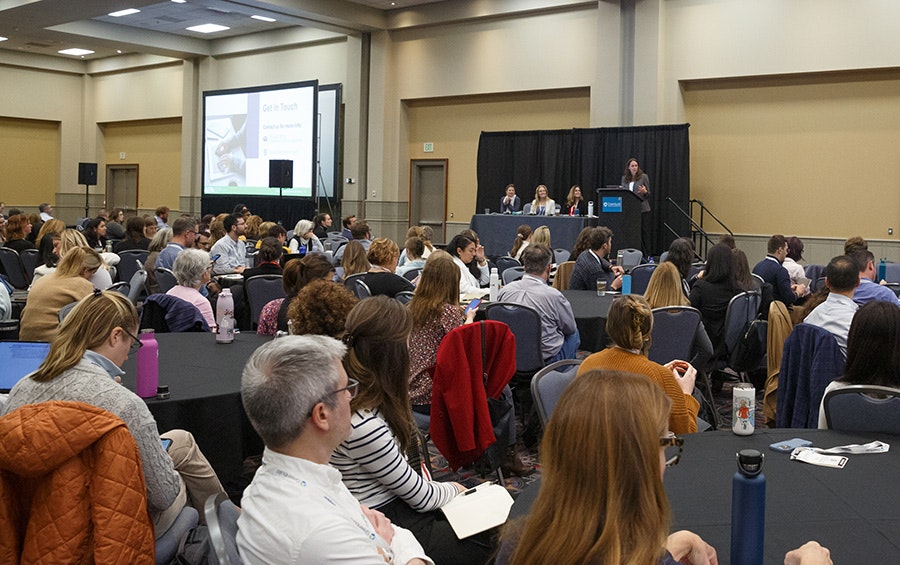
Greenbuild's AI Summit is already sold, however, there are other Greenbuild Summits are still available for sponsorship. Guarantee that the green building industry identifies you as a partner by sponsoring one of Greenbuild's Summits or Workshops taking place Tuesday, October 20, 2026, at the Javits Center in New York City.
Eric Peterson
Sponsorship Opportunities
202.256.0939
eric.peterson@informa.com